
Keto Cottage Cheese Flatbread: The Viral Recipe That Actually Works This Time
Picture this… you’ve scrolled past that viral keto cottage cheese flatbread trend about fifteen times on Pinterest, and every single time you’ve thought, “sure, I’ll give that a go someday.” 🍞 Well, someday is today, my friend. As someone who’s spent over three decades in health and fitness, watching diet trends come and go like bad weather in Ireland, I can tell you this one has real staying power—and for good reason.
This isn’t just another flash-in-the-pan food fad. This keto flatbread recipe delivers on taste, texture, AND nutrition, which is a rare trifecta in the low carb world. Whether you’re deep into a ketogenic diet, dabbling in low carb eating, or just trying to ditch the bloat that comes with traditional bread (I feel you—I struggled with that exact issue as a kid), this recipe deserves a spot in your rotation.
Made with just two humble ingredients—cottage cheese and eggs—this bread hits that sweet spot between high-fat diet friendly and genuinely satisfying. No nuts, no gluten, no sugar, no fuss. 🧀🥚
This one’s suitable for keto, gluten-free, nut-free, and diabetic-friendly eating plans. Perfect for breakfast, lunch, or dinner sandwiches, and honestly? It’s a fantastic snack on its own too.
#KetoCottageCheeseFlatbread #KetoBread #LowCarbFlatbread #KetoDiet #GlutenFreeBread #NutFreeKeto #HighProteinBread #KetoSandwich #LowCarbLiving #KetoRecipes
- 1. Quick Stats At A Glance
- 2. What You'll Actually Need
- 3. Ingredients You'll Need
- 4. Step-By-Step: How To Actually Make This Work
- 5. Serving It Up Right
- 6. How To Store Your Flatbread Creations
- 7. Why This Recipe Actually Works (And Why Your Body Will Thank You)
- 8. Common Mistakes That'll Sabotage Your Flatbread 😅
- 9. Swaps, Substitutions, and Budget-Friendly Tweaks
- 10. Your Burning Questions, Answered
- 11. Final Thoughts On This Viral Sensation
- 12. Next Recipes To Try

Quick Stats At A Glance
- Prep Time: 5 minutes
- Cook Time: 30 minutes
- Total Time: 35 minutes
- Servings: 6 mini flatbreads
- Calories: approximately 70 per flatbread
- Macros: 5g fat, 1g net carbs, 7g protein per serving
- Difficulty: Easy (seriously, if I can nail this on the first try, so can you)
What You’ll Actually Need
Nothing fancy here, IMO the equipment list is refreshingly simple compared to some keto baking projects I’ve tackled over the years.
- Silicone burger molds (non-negotiable—I’ll explain why below)
- A good blender or food processor
- Baking sheet (to keep those molds steady)
- Measuring cups or, better yet, a kitchen scale
- Spatula for flipping
Alternative note: Don’t have silicone burger molds? You genuinely cannot substitute a baking sheet here. The batter runs too thin without structure, and you’ll end up with a puddle instead of a flatbread. Trust me on this one—grab a set online, they’re inexpensive and you’ll use them again for Keto Egg Bites too.
Ingredients You’ll Need
Dairy & Protein:
- 285 grams (1 cup) full-fat cottage cheese, small curd, minimum 4% milk fat 🧀
- 2 large eggs 🥚
Seasonings (Optional but Recommended):
- ½ to 1 teaspoon dried Italian seasoning
- Salt and pepper to taste
- Garlic powder, if you’re feeling fancy
That’s it. Genuinely. This is the kind of ingredient list that makes grocery shopping a breeze, and IMO simplicity is massively underrated in the recipe world.
Step-By-Step: How To Actually Make This Work
Getting Set Up Properly
1. Preheat your oven to 350°F (175°C). Don’t skip this step or rush it—an underheated oven is a common culprit behind soggy, sad flatbreads.
2. Lightly grease six 4-inch silicone burger molds. Place these molds onto a baking sheet for stability; this prevents wobbling and uneven cooking.
Making The Batter
3. Weigh out 285 grams of cottage cheese and add it to your blender. I cannot stress this enough… weigh it, don’t eyeball it. The cottage cheese-to-egg ratio makes or breaks this recipe.
4. Add your 2 large eggs to the blender along with your chosen seasonings.
5. Blend everything for about 1 minute, or until the mixture becomes completely smooth and slightly foamy. Ever wondered why some flatbread attempts turn out grainy? This step is exactly why—rushing the blend leaves lumps that ruin the final texture.
Filling And First Bake
6. Divide the batter evenly between your six prepared molds—roughly ⅓ cup per mold, give or take.
7. Place the filled molds into your preheated oven and bake for 25 minutes, or until the flatbreads turn golden and puffy on top.
8. Remove from the oven and let them sit in the molds for 5 minutes. They will deflate slightly during this time… and that’s completely normal, not a failure on your part.
The Flip And Second Bake
9. After 5 minutes, carefully flip each flatbread over and place them back into the molds. They’ll still feel a bit moist at this stage, which is expected.
10. Return them to the oven at 350°F for another 5 minutes, or until they’re no longer moist to the touch.
11. Remove from the oven and allow them to cool in the molds for an additional 5 minutes so they firm up properly.
12. Transfer to a wire rack to cool completely, or use them warm if you’re impatient like me. 😄
Batch Cooking Tips
Doubling or tripling this recipe works beautifully for meal prep. Simply blend larger batches and bake in rounds if your mold count is limited. These freeze exceptionally well, so making a big batch on a Sunday sets you up for grab-and-go lunches all week.
Serving It Up Right
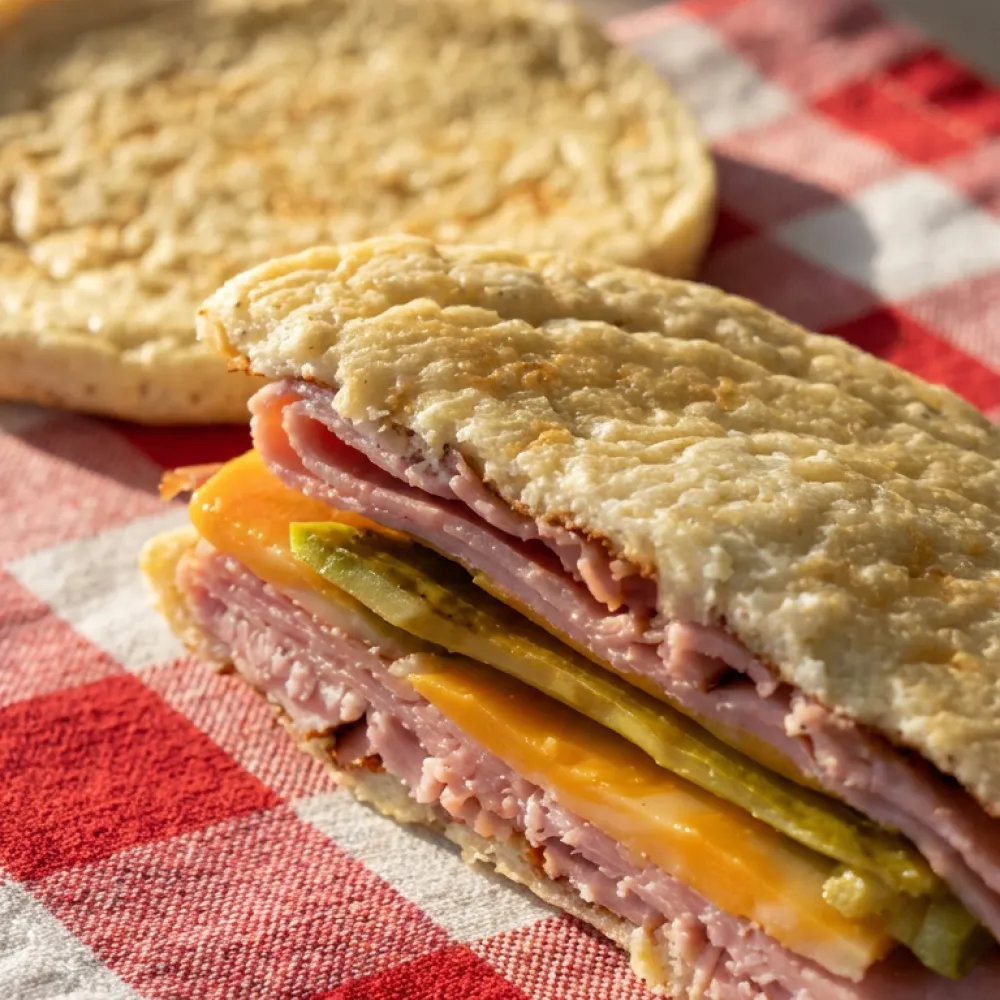
Once cooled, these little flatbreads become wonderfully soft and flexible—almost like a tortilla in texture. Stack two together for a full sandwich, or use one folded in half for a taco-style situation.
For a picture-perfect Pinterest moment, layer with smashed avocado, a poached egg, and everything bagel seasoning on top. The contrast of colors against that golden flatbread photographs beautifully.
Complementary recipe pairings:
- Fill it like you would Keto Chicken Salad for a satisfying lunch
- Pair it alongside Keto Tuna Salad for a protein-packed combo
- Use it as a dipping bread with Keto Guacamole
Flavor enhancers: A drizzle of olive oil and fresh herbs elevates the flavor if you’re serving these as an appetizer. A sprinkle of parmesan before the second bake adds a lovely savory crust too.
When to serve: These work for literally any occasion—weekday breakfasts, packed lunches, casual dinner parties, or as a base for appetizers when guests come round. Versatility is genuinely one of this recipe’s strongest selling points.
How To Store Your Flatbread Creations
Eat leftovers straight away if you’re impatient (no judgment here), or store them properly for later enjoyment.
Refrigerator storage: Place cooled flatbreads in an airtight container and refrigerate for up to 2 days.
Freezer storage: For longer storage, place them in a freezer-safe container for up to 1 month. Here’s a genuinely useful tip… place parchment paper between each flatbread before freezing, otherwise they’ll stick together into one giant flatbread block.
Reheating: Pop refrigerated flatbreads into a toaster oven or regular oven at 300°F for about 5 minutes to restore that slightly crisp exterior. Microwaving works in a pinch but softens the texture more than I’d personally like.
On-the-go option: These travel brilliantly in a lunch bag once cooled, making them ideal for packed lunches or post-gym snacks.
Why This Recipe Actually Works (And Why Your Body Will Thank You)
Let’s talk nutrition for a moment, because this is where things get genuinely exciting from a health perspective. Cottage cheese brings substantial protein to the table—we’re talking roughly 7 grams per flatbread—while keeping net carbs remarkably low at around 1 gram per serving.
For anyone following a ketogenic diet or working toward sustained ketosis, this matters enormously. Traditional bread torpedoes blood sugar and kicks you out of fat-burning mode almost instantly. This flatbread doesn’t do that.
Notable perks of this recipe:
- High-protein (thanks to the double punch of eggs and cottage cheese)
- Naturally gluten-free
- Nut-free (a genuine rarity in keto baking)
- Sugar-free
- Diabetic-friendly
- Low carbohydrate diet approved
Beyond the macros, there’s something satisfying about a recipe with just two core ingredients doing this much heavy lifting. As someone who’s guided countless clients through various dietary approaches over the years, I’ve learned that sustainable eating comes down to simplicity and satisfaction—this flatbread delivers both.
The high-fat diet approach that keto champions isn’t about deprivation; it’s about nutrient density and satiety. This recipe embodies that philosophy perfectly.
Common Mistakes That’ll Sabotage Your Flatbread 😅
Mistake #1: Skipping the scale. Eyeballing your cottage cheese measurement throws off the entire ratio, leading to batter that won’t set properly. Weigh it, always.
Mistake #2: Using a baking sheet instead of molds. I know, I know… you don’t want to buy new equipment. But the batter is simply too thin without structure and will spread into an unappetizing puddle.
Mistake #3: Skipping the flip. That second bake after flipping is what transforms this from “slightly eggy custard” into “actual bread texture.” Don’t rush past it.
Mistake #4: Not letting it cool properly. Pulling these from the molds too early causes them to fall apart. Patience pays off here—give them the full cooling time. 🕐
Mistake #5: Using low-fat cottage cheese. Full-fat, minimum 4% milk fat, produces significantly better texture and flavor. This isn’t the place to cut fat, ironically.
Swaps, Substitutions, and Budget-Friendly Tweaks
Cottage cheese swap: Ricotta cheese works as a substitute if that’s what you have on hand, though the texture shifts slightly firmer.
Budget option: Store-brand cottage cheese works just as well as premium brands—there’s no need to splash out on fancy dairy for this one.
Seasoning swaps: Swap Italian seasoning for taco seasoning if you’re planning to use these for a Mexican-inspired meal, or try everything bagel seasoning for a breakfast-focused version. Check out my Keto Taco Seasoning recipe for a homemade blend.
For higher protein goals: Add a tablespoon of unflavored whey or egg white protein powder to the blend for an extra protein boost, ideal if you’re combining keto with strength training goals.
Dairy-free consideration: Unfortunately, this specific recipe relies heavily on cottage cheese’s unique properties, making a true dairy-free swap tricky. If dairy-free is essential, my Keto Naan Bread might suit your needs better.
Your Burning Questions, Answered
Q: Can I make this without the silicone molds?
A: Honestly, no—not successfully. The batter is too thin and needs structure to hold its shape while baking.
Q: Does it really taste eggy?
A: There’s a mild egg flavor, but once you add fillings, it becomes barely noticeable. I found it pairs beautifully with savory ingredients like ham and avocado.
Q: Can I double the recipe?
A: Absolutely, this scales up brilliantly for meal prep. Just ensure you have enough molds or bake in batches.
Q: Is this recipe suitable for the carnivore diet?
A: Mostly yes, given it’s just cottage cheese and eggs, though the seasonings would need to be omitted for strict carnivore adherence.
Q: How many net carbs per flatbread?
A: Roughly 1 gram net carb per flatbread, making it exceptionally keto-friendly.
Q: Can I use flavored cottage cheese?
A: I’d stick with plain for best results—flavored varieties often contain added sugars that work against your low carbohydrate diet goals.
This website may contain affiliate links, which means that if you click on one of the product links, the website may receive a small commission at no extra charge to you!
Final Thoughts On This Viral Sensation
This keto cottage cheese flatbread genuinely earns its viral status, unlike so many trends I’ve watched fizzle out over my thirty-plus years in this field. The combination of simplicity, nutrition, and honestly good taste makes it a recipe worth keeping in permanent rotation.
Whether you’re new to the ketogenic diet or a seasoned low-carb veteran, this flatbread solves that eternal “what do I eat this in” problem without derailing your progress. 🥪
Give it a proper go, weigh your ingredients, use those molds, and don’t rush the cooling process—you’ll end up with a bread substitute that actually satisfies. For more foundational keto baking knowledge, check out my Keto Diet for Beginners guide.
Next Recipes To Try
Loved this flatbread? Keep the momentum going with these reader favorites:
keto cottage cheese flatbread
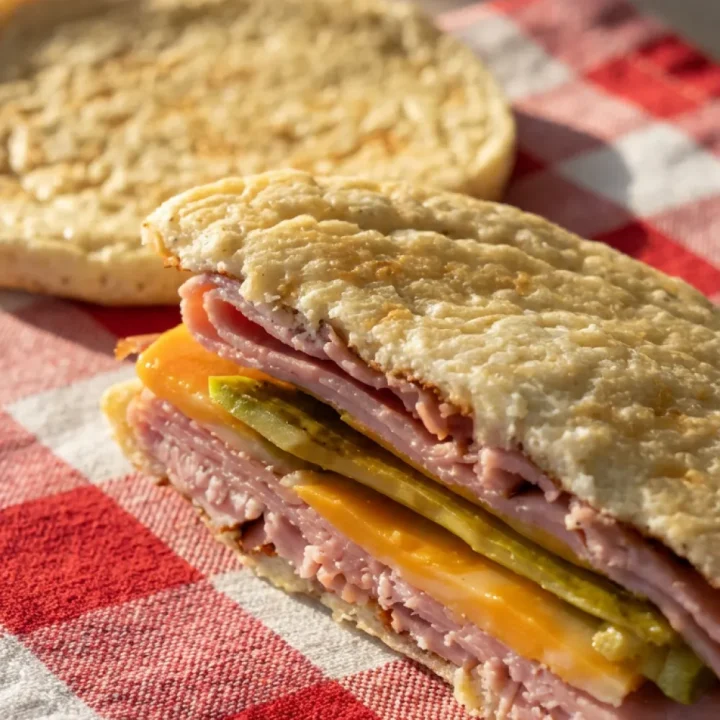
A viral, easy keto flatbread made with just cottage cheese and eggs. This nut-free, gluten-free, sugar-free flatbread is perfect for sandwiches, wraps, or a standalone snack while keeping you firmly in ketosis.
Ingredients
- 285 grams (1 cup) full-fat cottage cheese, small curd, minimum 4% milk fat
- 2 large eggs
- 1/2 to 1 teaspoon dried Italian seasoning (optional)
- Salt and pepper to taste (optional)
Instructions
- Preheat oven: Preheat oven to 350°F. Lightly grease six 4-inch silicone burger molds and place them on a baking sheet.
- Blend batter: Weigh 285g cottage cheese and add to a blender with 2 large eggs and optional seasonings. Blend for 1 minute until smooth and slightly foamy.
- Fill molds: Divide batter evenly between the six molds, about ⅓ cup each.
- First bake: Bake for 25 minutes until golden and puffy. Remove and let sit in molds for 5 minutes; they will deflate slightly.
- Flip and second bake: Flip each flatbread and return to molds. Bake for another 5 minutes at 350°F until no longer moist.
- Cool: Remove from oven, cool in molds for 5 minutes, then transfer to a wire rack to cool completely before serving.
Notes
Weigh your cottage cheese for the correct ratio. Use full-fat, small curd cottage cheese with at least 4% milk fat for best texture. Silicone burger molds are essential; a flat baking sheet will not work as the batter is too thin.
Nutrition Information
Yield 6 Serving Size 1 flatbreadAmount Per Serving Calories 70Total Fat 5gSaturated Fat 2gTrans Fat 0gUnsaturated Fat 3gCholesterol 85mgSodium 180mgCarbohydrates 2gNet Carbohydrates 1gFiber 1gSugar 1gProtein 7g